

Innovation in vocational education is most effective when it responds to real needs. Before developing training materials, learning modules and Augmented Reality experiences, the DigiGEAR partnership first sought to understand a fundamental question: what skills will future automotive professionals need, and how can vocational education better prepare learners for a rapidly changing sector?
To answer this question, the consortium carried out an extensive research and consultation process involving vocational education providers, industry stakeholders and experts from across Europe. The objective was not only to identify emerging trends, but also to ensure that the educational solutions developed by the project would be aligned with the realities of the automotive industry and the challenges faced by VET institutions.
The findings revealed a sector undergoing profound transformation. Across countries, stakeholders highlighted the growing importance of electric mobility, digitalisation, software-based systems and advanced vehicle technologies. Traditional mechanical expertise remains important, but it is increasingly complemented by competences related to battery technologies, mechatronics, computer-based diagnostics, connected vehicles and sustainable engineering practices. At the same time, soft skills such as problem-solving, communication, teamwork and a continuous learning mindset were recognised as equally important for future professionals.
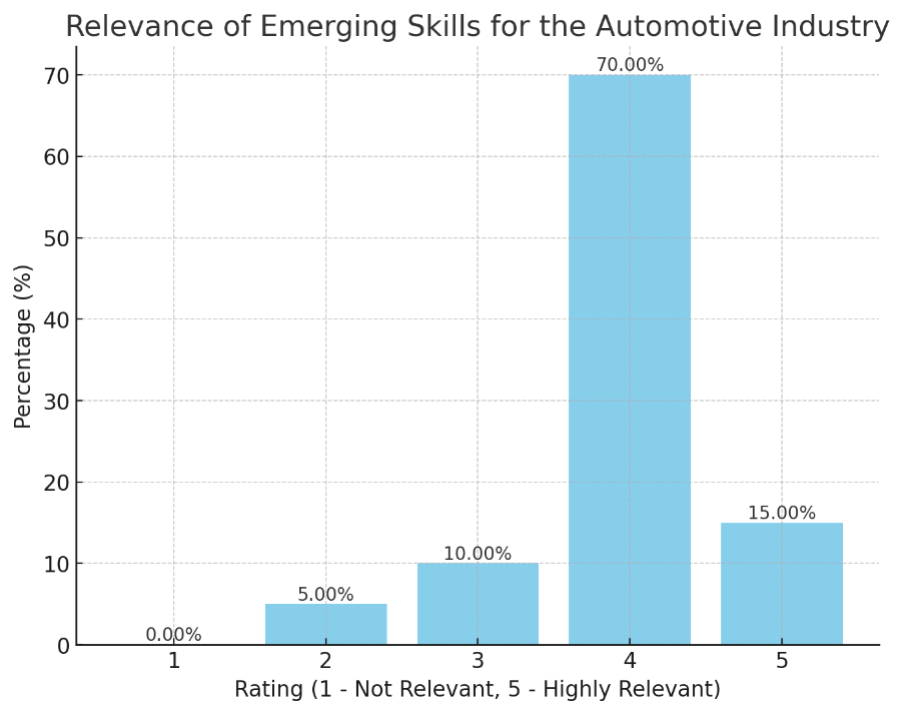
To validate these findings, DigiGEAR collected feedback from 20 experts representing seven European countries and different areas of the automotive ecosystem, including vocational education, research and development, manufacturing and management. The consultation confirmed a strong consensus regarding the project’s analysis: 90% of experts agreed that the identified competences accurately reflected current skills gaps within the automotive sector.
When experts were asked to rank the skills that will have the greatest relevance for the future of the industry, Electric Vehicle Technology emerged as the top priority, followed by Software Development, Mechatronics, Artificial Intelligence and Machine Learning, and Connected Vehicle Technologies. These results clearly demonstrate the direction in which automotive education must evolve if it is to remain relevant to labour market needs.
The research also highlighted challenges that extend beyond skills alone. Across several participating countries, vocational training providers reported difficulties in keeping laboratories, equipment and teaching methods aligned with technological developments. Common themes included outdated infrastructure, limited access to advanced technologies, shortages of specialised expertise, insufficient industry collaboration and the need for greater integration of digital tools and innovative learning approaches. These challenges were identified in multiple national analyses conducted within the project, demonstrating that they are shared across different European contexts rather than isolated local issues.
These insights directly influenced the design of DigiGEAR. Rather than developing educational resources based solely on assumptions about future trends, the consortium adopted an evidence-based approach. The emerging skills analysis, expert validation activities and assessment of current training environments collectively informed the project’s educational framework and learning priorities. This process helped ensure that the project’s outputs address both current skills requirements and future developments in the automotive industry.
Equally important was the project’s commitment to co-design. DigiGEAR was built through continuous dialogue between education providers and industry stakeholders. This collaboration helped bridge the gap that often exists between classroom learning and workplace expectations, creating a stronger foundation for the development of training resources that reflect real-world professional environments.
The process demonstrated that innovation in vocational education does not begin with technology. It begins with listening. By identifying emerging skills, validating them with experts and understanding the practical challenges faced by training providers, DigiGEAR established a solid foundation for developing educational solutions that are relevant, future-oriented and closely aligned with the evolving needs of the automotive sector.
Ultimately, the project’s approach highlights an important lesson for vocational education: meaningful innovation is most effective when it is informed by evidence, shaped by stakeholder collaboration and designed with the future workforce in mind.