
The automotive sector is experiencing a profound transformation driven by electrification, digitalisation, advanced diagnostics, connected vehicles and sustainable mobility solutions. These developments are changing not only the technologies used in modern vehicles but also the skills required by current and future professionals. As a result, vocational education and training (VET) providers across Europe face the challenge of preparing learners for increasingly complex and technology-driven working environments. Addressing this challenge requires innovative educational approaches capable of connecting theoretical knowledge with practical industry requirements.
This is the context in which DigiGEAR (Introducing Augmented Reality in the VET Sector with a Focus on Automotive Engineering) was created. Funded under the Erasmus+ programme, the project brings together organisations from Italy, Greece, Portugal, Slovakia, Sweden, Germany and Belgium, combining expertise in vocational education, automotive training, digital technologies, quality assurance and European networking.
The DigiGEAR partnership includes The Way (Italy), AKMI Institute of Vocational Training (Greece), EVBB – European Association of Institutes for Vocational Training, Newport Group (Slovakia), BK Consult GmbH (Germany), ISQ – Welding and Quality Institute (Portugal), Gothenburg Technical College (Sweden) and Maggioli SpA (Italy). Together, the consortium is working to support the modernisation of automotive vocational education and training across Europe.
The project responds to skills needs identified throughout the European automotive ecosystem. Research conducted during the project’s preparatory phase highlighted increasing demand for competences related to electric mobility, battery technologies, computer-based diagnostics, mechatronics, digital systems and sustainable automotive practices. Across the sector, employers are seeking professionals who can combine technical expertise with adaptability, digital literacy and problem-solving capabilities.
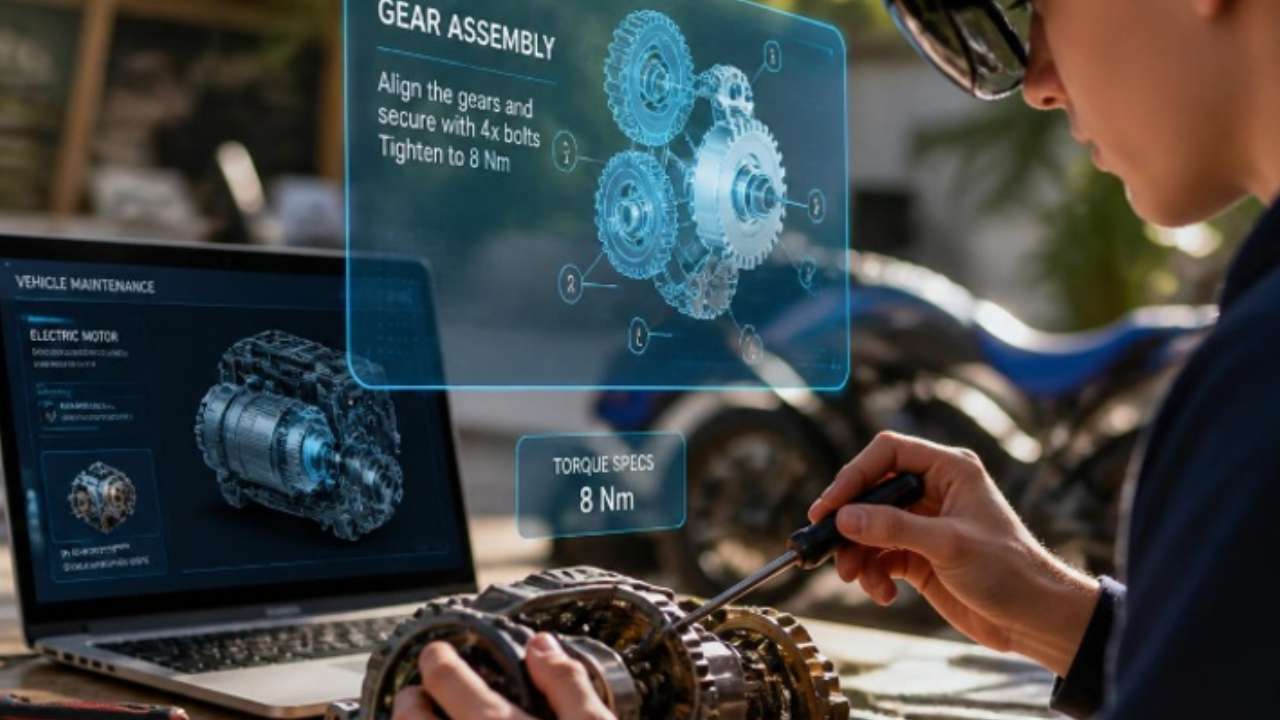
To address these evolving needs, DigiGEAR explores the use of Augmented Reality (AR) as an innovative learning tool within vocational education. Rather than replacing workshop-based learning, AR is used to complement existing training methods by helping learners visualise complex systems, understand technical processes and interact with educational content in a more engaging way. Experience from the use of AR in vocational education highlights several benefits, including increased learner engagement, improved understanding of complex and layered systems, immediate feedback during learning activities and safer opportunities to explore technologies and procedures before working with real equipment. These advantages are particularly relevant in the field of electric mobility, where access to specialised components and high-voltage systems can sometimes be limited.
One of the project’s distinctive features is its systemic approach to electric mobility. DigiGEAR combines learning modules and AR activities organised around the flow of energy within an electric vehicle ecosystem. Learners are guided through the entire process, from renewable energy generation and charging infrastructure to batteries, inverters and electric motors, helping them understand how these elements interact within modern electric mobility systems.
The DigiGEAR Training Package consists of ten learning modules covering key topics related to electric mobility and automotive engineering, including electric mobility concepts, charging infrastructure, batteries, inverters, electric motors and sustainability principles. The objective is to provide learners with both technical knowledge and a broader understanding of how future mobility systems operate.
The training package is complemented by dedicated Augmented Reality scenarios that allow learners to interact with three-dimensional representations of components, systems and processes. Through these immersive learning experiences, participants can explore complex automotive technologies in an interactive way, supporting a deeper understanding of concepts that are often difficult to visualise through traditional teaching methods alone. By combining visualisation, interaction and immediate feedback, these activities help learners strengthen both conceptual understanding and practical reasoning before engaging with real automotive systems.
The project also tackles challenges commonly faced by VET institutions across Europe. Findings from the research phase highlighted issues including outdated equipment, limited access to emerging technologies, insufficient exposure to electric vehicle systems and the need for stronger cooperation between education providers and industry. By offering innovative digital learning resources that complement existing laboratories and classroom activities, DigiGEAR aims to help educators respond to these challenges more effectively.
The expected impact extends beyond learners. Trainers gain opportunities to experiment with innovative teaching methodologies, while VET providers can enrich their educational offer through accessible digital tools. At the same time, collaboration among partners from different countries promotes the exchange of knowledge, expertise and good practices across the European VET community.
Ultimately, DigiGEAR represents more than the development of new training materials. It is a collective effort to support the modernisation of vocational education and ensure that learners and emerging automotive technicians are equipped with the competences needed to thrive in an increasingly digital, sustainable and technology-driven sector. Through innovation, collaboration and a strong connection between education and labour market needs, DigiGEAR contributes to building a more resilient and future-oriented VET ecosystem across Europe.